Sage
鼠尾草 Salvia officinalis · Lamiaceae
A woody Mediterranean herb with a concentrated-oil warning: the kitchen leaf is not the same as the essential oil.
The thujone question
Sage contains thujone, a compound that is the reason the herb is treated differently from parsley or basil. NCCIH notes that sage is likely safe in food amounts, but that high doses or long-term use may be unsafe because of thujone (NCCIH). The leaf on a roast is not the same as a concentrated oil.
PFAF adds that excess can cause restlessness, vomiting, vertigo, tremors and seizures, and that sage is contraindicated in pregnancy and in people predisposed to convulsions (PFAF). Cooking with sage is a different decision from taking a supplement or swallowing essential oil.
| Use | Form | Risk |
|---|---|---|
| Culinary | Fresh or dried leaf | Generally regarded as food |
| Tea | Dried leaf infusion | Concentrated; avoid high or long-term use |
| Supplement | Capsule or extract | Thujone dose matters; ask a clinician |
| Essential oil | Concentrated oil | Not for swallowing; toxic in overdose |
Growing it
Give sage full sun and sharp drainage. On heavy soil, plant it on a mound of grit and compost, or grow it in a raised bed. Water young plants until they establish, then only in prolonged drought. Overfeeding produces soft, floppy growth with less flavour.
Replace plants every three or four years, when the stems become woody and leggy. Take softwood cuttings in late spring as insurance. After flowering, cut back to a healthy pair of leaves, but never into bare old wood, which may not resprout.
Harvest and drying
Pick individual leaves or take the top 10 cm of young stems through summer. Flavour is strongest before the plants flower. Harvest in the morning and use fresh, or dry small bundles in a dark, airy place.
Sage dries well and keeps its aroma for months. Strip leaves from the stems once dry, store them whole in an airtight jar, and crush only when needed. For culinary use, whole dried leaves retain more oil than pre-crumbled ones.
- Pick young leaves before flowering.
- Harvest in the morning.
- Dry in small bundles, in the dark.
- Store whole; crush at use.
Identifying it
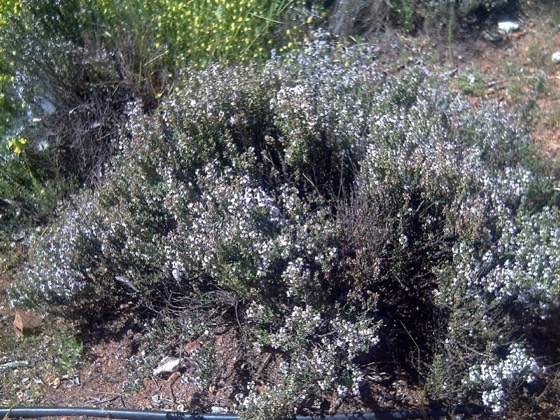
Common sage has oblong, wrinkled, grey-green leaves with a white-woolly underside, and blue-purple flowers in early summer. The stems become woody at the base. Purple and tricolour sages are ornamental forms of the same species.
Other Salvia species are grown as ornamentals and some have different chemistry. Do not assume that every plant sold as sage is culinary sage. Check the botanical name on the label.
Traditional context
Sage has a long culinary and household history in Europe, including use as a gargle and a preserving herb. Its essential oil contains thujone, which is the reason concentrated products are treated with caution rather than as a stronger version of the kitchen herb.
NCCIH notes that sage may be unsafe in pregnancy because of thujone, and that little is known about use while breastfeeding. This page covers growing and handling, not a dose or treatment plan.
Cautions
Safety notes for sage
- Contains thujone; avoid high-dose extracts and essential oil internally (PFAF).
- Avoid medicinal doses in pregnancy; NCCIH notes thujone may be harmful (NCCIH).
- Traditional use to dry up breast milk; avoid during breastfeeding unless a clinician advises otherwise.
- Avoid high doses in people with epilepsy or a history of seizures (PFAF).
- Essential oil can irritate skin and is toxic if swallowed; keep away from children.
- This is horticultural information, not medical advice or a dose recommendation.
A starting point for a conversation with a qualified practitioner or pharmacist — not a diagnosis, dose or treatment plan. See the full safety page.
Questions this plant raises
Why did my sage die over winter?
Winter wet is more often fatal than cold. Improve drainage, plant on a mound, and avoid cutting into bare woody stems in autumn.
Can I grow sage in a pot?
Yes. Use a gritty, free-draining compost and a pot with a large drainage hole. Move it under cover for winter in wet climates.
How do I keep sage from getting woody?
Prune lightly after flowering and replace the plant every few years from cuttings. Severe cutting into old wood often kills the plant.
Sources & further reading
Accessed for horticultural and safety context. Traditional-use statements are historical and are not evidence of effectiveness. Written and edited by the Herb Ledger editorial team. Read the editorial policy.
More leaves & stems