Astragalus
黄芪 Astragalus membranaceus · Fabaceae
A slow, taprooted legume grown for a woody root lifted after three or four seasons.
Is it worth the wait?
Astragalus is a three-to-four-year root crop, not a first-season harvest. In garden practice the first year builds the crown and taproot, the second fills the root, and the lift comes in the third or fourth autumn. If you want a root this season, grow ginger or turmeric instead; if you have deep ground and a long view, astragalus is a low-input perennial that also fixes nitrogen.
The decision is mostly about root run and patience. A deep, stone-free bed gives the straightest root. A container works as an experiment, but the root will be shorter and more twisted, choose the deepest pot you can manage; a small pot gives a small, twisted root. Heavy, wet clay is the main failure mode: the crown rots in winter far more often than it freezes.
| Situation | What astragalus asks | A sensible choice |
|---|---|---|
| Deep bed, full sun, 3+ years | A deep, stone-free bed; room to spread; little feeding | Grow it for roots |
| Container only | A deep pot; steady watering; smaller root | Try one plant, or grow ginger for an annual root |
| Heavy wet clay | Raises the crown above winter water | Raised bed, or choose a different herb |
| Harvest wanted this year | No root ready before year 3 | Grow a leaf or annual crop instead |
Growing it
PFAF describes the species on dry sandy soils in full sun and gives USDA zone 5–9 (PFAF). Work the soil deeply, remove stones from the root zone, and choose the sunniest spot you have. A forked root is hard to clean and usually comes from an obstruction, not from bad seed.
Scarify the hard seed coat before sowing. A related Astragalus protocol reports that scarification lifts germination sharply, but emergence is spread out: a few seedlings appear within a week, the bulk after two to three weeks, and stragglers can continue for a month (Native Plant Network). Sow shallowly — barely cover the seed — and keep the tray warm at room temperature. Keep it moist but not wet, then thin so each crown has room to spread; 30–45 cm is a common garden spacing. Once established, water only when the soil is genuinely dry; rich feeding makes leaf at the expense of root.
Winter wet is the real test. Plant on a slight mound on heavy soil, keep mulch away from the crown, and do not cut into the crown when clearing old stems. The yellow pea flowers are useful for pollinators, but they are not the crop.
Wet-winter failure mode
Wet cold is the failure that a hardiness zone hides. Astragalus comes from dry, sunny ground; it can survive the cold and still die in a mild, wet winter. The RHS explains the mechanism: saturated soil reduces oxygen to the roots and can cause yellowing, root rot and death (RHS). The table below is a diagnostic pattern to check against your own bed, not a logged trial.
The practical test is drainage, not the zone label. Dig a hole in the intended bed, fill it with water, and see how long it stands after winter rain. If the bed is in a low corner or the soil stays slick for days, fix the site before planting: a raised bed, a mound, compost for structure, and a clear gap between mulch and the crown.
| Failure pattern | What to check | What to do |
|---|---|---|
| Crown soft or black in spring | Crown at soil level after snowmelt; water standing in the bed | Lift and discard affected plants; replant in a raised bed or mound |
| Yellowing in late autumn | Soggy soil around the crown; a compacted layer below | Improve structure with compost; avoid working wet clay |
| Hollow or brown root at harvest | Root rot rather than a clean, pale interior | Do not store affected roots; fix drainage before replanting |
| Plant fails to regrow | Freeze–thaw lifted the crown; mulch held moisture | Reset the crown; keep mulch clear; improve downslope drainage |
Harvest and drying
Lift roots in the third or fourth autumn, after the stems die back and before the ground freezes. PFAF describes four-year-old roots as the harvest; three-year roots are usable but smaller (PFAF). Water the bed the day before, fork well outside the crown, and ease the root up rather than levering it, which snaps the best part.
Wash and scrub the root, trim the fine side roots, and slice it lengthwise or into thick discs. Dry at the lowest setting of a dehydrator, or in a warm, airy room, until the pieces snap, then condition them in a sealed jar for 24 hours and check for condensation. Store airtight in the dark and discard any soft or mouldy pieces. The drying guide covers conditioning in detail.
Expect a modest home harvest rather than a commercial yield: one plant gives a small bundle of dried slices, and the wait is part of the cost. That is the trade for a perennial that needs little beyond weeding and drainage.
- Cut stems at ground level after autumn die-back.
- Fork outside the crown and ease the root up.
- Scrub, trim the side roots, and slice.
- Dry at low heat until snap-dry; condition and label.
Identifying it
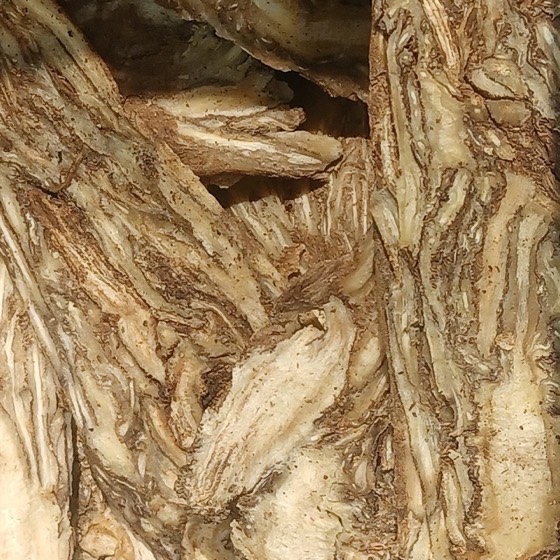
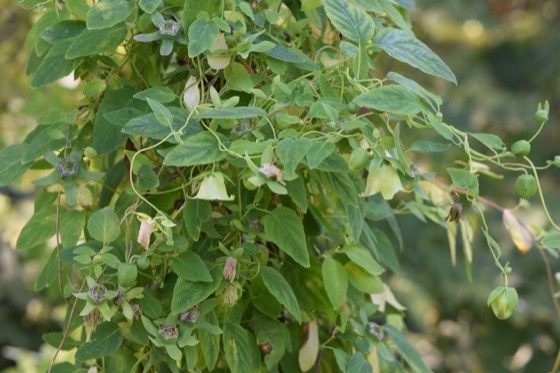
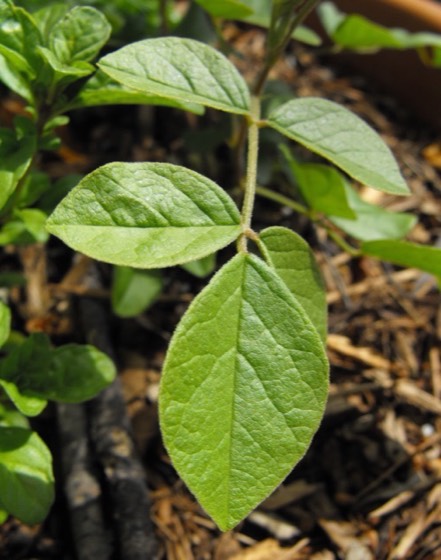
Look for pinnate leaves with many small oval leaflets, a slightly grey-green cast, and yellow pea flowers in short spikes. The pods are small, papery and inflated; the cultivated root is pale yellow inside with a fibrous core. The plant is a legume, not a member of the carrot family.
The genus is large and not every Astragalus is safe. PFAF warns that many species contain toxic glycosides and that some can accumulate selenium from selenium-rich soil (PFAF). Locoweed (Oxytropis and some Astragalus species) is the lookalike to know; it is not interchangeable. Grow named seed, keep the label with the dried root, and do not wild-collect.
Traditional context
The root has a long record in Chinese medicine, usually in multi-herb formulas rather than alone. That history is worth recording, but it is not evidence of effectiveness: NCCIH concludes there is not enough reliable evidence to know whether astragalus is useful for any health condition (NCCIH).
This page covers cultivation, harvest and handling. It gives no dose, preparation for internal use or treatment claim; those are decisions for a qualified practitioner who knows your history and medicines.
Cautions
Safety notes for astragalus
- People with autoimmune disease should avoid astragalus; NCCIH notes it may worsen autoimmune symptoms (NCCIH).
- It may interact with immunosuppressant medicines; ask your clinician or pharmacist before combining (NCCIH).
- Little is known about safety in pregnancy and breastfeeding; animal research suggests a fetal toxicity signal. Avoid unless a qualified clinician advises otherwise (NCCIH).
- Research suggests it may lower blood glucose, but the studies are mostly low quality. Monitor if you take diabetes medication and ask a clinician before regular use (NCCIH).
- Traditional sources describe a blood-pressure-lowering effect; caution with blood-pressure medication is prudent, but this is not a confirmed clinical interaction (PFAF).
- Some Astragalus species accumulate selenium in selenium-rich soil. Use named seed and do not harvest from unknown ground (PFAF).
- As with other legumes, allergy is possible; stop if you react.
- This is horticultural information, not medical advice or a dose recommendation.
A starting point for a conversation with a qualified practitioner or pharmacist — not a diagnosis, dose or treatment plan. See the full safety page.
Questions this plant raises
How long until I can harvest the root?
Three to four years. PFAF describes four-year-old roots as the harvest; three-year roots are smaller but usable. The wait is the main cost of growing astragalus.
Can I grow it in a container?
Yes, as an experiment, in a deep, free-draining compost; the deeper the pot, the better. The root will be shorter and more twisted than in a deep bed, and the pot needs steady watering without becoming waterlogged.
Why is germination slow and uneven?
The seed coat is hard. Scarify it lightly before sowing, keep the tray around room temperature, and expect the bulk of germination after two to three weeks, with stragglers for another month. Old seed and cold, wet compost make the spread worse.
Sources & further reading
- Plants for a Future — Astragalus membranaceusPFAF
- NCCIH — Astragalus: Usefulness and SafetyNCCIH
- Native Plant Network — Astragalus propagation protocol (related species)Native Plant Network
- RHS — Waterlogging and flooding solutionsRHS
Accessed for horticultural and safety context. Traditional-use statements are historical and are not evidence of effectiveness. Written and edited by the Herb Ledger editorial team. Read the editorial policy.
More roots & rhizomes