Licorice
甘草 Glycyrrhiza uralensis · Fabaceae
A sweet, spreading root that needs a root barrier and a careful safety read before it earns a bed.
The spread problem
Licorice is a runner. PFAF describes a plant that spreads indefinitely by rhizomes, with roots and shoots along their length (PFAF). That is the first decision, before soil or sowing: give it a dedicated bed with a barrier, grow it in a large container, or leave it out. A piece left in the ground can start again.
The root is the crop, so a clean, straight runner is easier to lift and wash than a tangled colony. A barrier should be solid and deeper than the rhizome zone; a loose line of stones will not stop it. If you only have a small border, a container is the honest choice, even though the root will be smaller.
| Situation | What happens | Best choice |
|---|---|---|
| Dedicated bed with a solid barrier | Runners stay in bounds; roots lift cleanly | Best for a serious root harvest |
| Large container | Spread is controlled; root is smaller | Workable for one or two plants |
| Open border | Runners travel; harvest becomes a dig | Only if you can chase them |
| Wet clay | Crown and roots are at risk in winter | Raise the bed or choose another herb |
Growing it
PFAF gives USDA zone 5–9 and describes dry, sandy ground; it also notes that licorice tolerates a range of soils but resents a waterlogged crown. Full sun and deep, free-draining soil give the straightest root. Work the bed deeply and remove stones; a forked root is harder to clean and dry.
Sow scarified seed in spring, or plant a piece of rhizome with at least two buds. Water young plants until they establish, then water deeply and less often. Do not overfeed: rich soil makes leaf and soft growth at the expense of the root. The pea-like flowers are useful for pollinators, but the root is the reason to grow it.
Harvest and drying
Lift roots in the third or fourth autumn. PFAF describes harvesting roots from three- to four-year-old plants in early autumn (PFAF). Follow a runner away from the crown with a fork, lift a length, and leave the crown and some roots to regrow. Do not try to lift the whole colony at once.
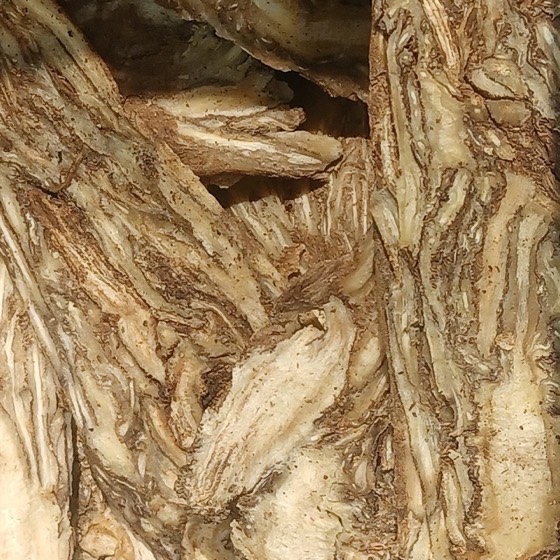
Scrub the roots, trim the fine side roots, and cut them into short lengths. Leave the bark on for a rustic slice or peel it for a cleaner one; the inside is bright yellow. Dry at the lowest setting of a dehydrator, or in a warm, airy room, until the pieces snap and the colour dulls slightly. Condition in a sealed jar for 24 hours, then store airtight in the dark; sweetness concentrates as the root dries.
- Trace a runner away from the crown with a fork.
- Lift a length, cut cleanly, and backfill.
- Scrub and cut into short pieces.
- Dry until brittle; condition and label.
Identifying it
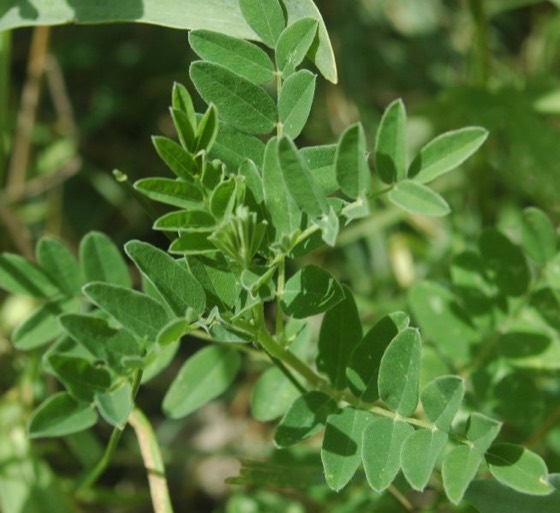
The compound leaves have 9–17 oval leaflets with sticky glandular hairs. Flowers are pea-shaped, violet-blue, in dense spikes, followed by small brown burr-like pods. The root's yellow interior is a useful confirmation when cut.
Wild licorice is collected commercially, and over-collection is a conservation concern. Garden-grown stock is easier to verify and kinder to wild populations. Do not substitute an unidentified yellow root from a mixed border.
Traditional context
Licorice is one of the most widely used herbs in the world and appears in both Chinese and European traditions, often to harmonise a formula. Its sweet constituent, glycyrrhizin, is also why the plant carries real safety cautions rather than being a harmless sweet root.
The root is not a casual everyday ingredient. Long-term or high intake can affect blood pressure and potassium levels, and it interacts with several common medicines. This page covers growing and handling, not a dose or a treatment plan.
Cautions
Safety notes for licorice
- Glycyrrhizin can raise blood pressure, cause fluid retention and lower potassium, especially with prolonged or high intake (NCCIH).
- Avoid with hypertension, heart disease, kidney disease, low potassium or during pregnancy unless a qualified clinician advises otherwise.
- Interacts with corticosteroids, according to NCCIH (NCCIH); PFAF also warns about digoxin, blood-pressure medicines and kidney disease (PFAF). Ask a pharmacist before combining.
- NCCIH warns that serious effects, including irregular heartbeat, are possible with large or long-term intake, particularly in people who consume a lot of salt or have heart or kidney conditions.
- Do not give licorice sweets or extracts to children as a herbal remedy.
- This is horticultural information, not medical advice or a dose recommendation.
A starting point for a conversation with a qualified practitioner or pharmacist — not a diagnosis, dose or treatment plan. See the full safety page.
Questions this plant raises
How do I stop licorice spreading?
Grow it in a raised bed with a solid base or sink a root barrier deeper than the rhizome zone. Remove runners promptly; small pieces regrow.
Can I harvest without killing the plant?
Yes. Lift side runners and leave the crown and several roots intact. The colony recovers and can be harvested again in a few years.
Why is the root yellow inside?
The bark is brown outside and the wood is bright yellow inside. Peeling exposes the yellow interior; that is normal and not a sign of disease.
Sources & further reading
Accessed for horticultural and safety context. Traditional-use statements are historical and are not evidence of effectiveness. Written and edited by the Herb Ledger editorial team. Read the editorial policy.
More roots & rhizomes