Field guide 12
Container size and the harvest you can expect
A bigger pot is not automatically better. Match volume to root architecture, light and the part you harvest — then judge the result honestly.
01Litres, not pot diameter
Pots are sold by diameter because it is easy to measure. Plants live by volume. A 30 cm bowl and a 30 cm deep pot can differ by 10 litres or more, and that difference decides how often you water, how far roots can run and whether the plant survives a hot week. When a pot’s volume is not stated, estimate it: a cylinder’s volume is roughly 3.14 × radius² × depth, measured inside the pot.
For herbs, the useful question is not “what is the biggest pot I can fit?” but “what is the smallest pot this plant can occupy without stalling?” A mint that runs through a border is manageable in 10–15 litres. A rosemary that will become a woody shrub needs more root room and, more importantly, sharp drainage. A deep taproot needs depth before width.
02Root architecture sets the minimum
| Root type | Examples | What it needs |
|---|---|---|
| Taproot | Astragalus, licorice, burdock | Depth; a shallow bowl causes forking or stalled growth |
| Fibrous and spreading | Mint, lemon balm, oregano | Moderate volume; mint needs a pot to contain runners |
| Rhizome | Ginger, turmeric | Loose, rich volume; room to swell and spread |
| Woody shrub | Rosemary, lavender, sage | Drainage first, then enough volume for a stable root ball |
| Vining perennial | Schisandra, goji | Large volume and support; a long-term commitment |
A taproot in a shallow pot does not simply grow sideways and adapt. It may fork, produce a smaller root or fail to establish. If the harvest is the root, pot depth is part of the crop, not a decorative choice. If the harvest is leaves or flowers, a fibrous root system can tolerate a smaller pot for a season, but it will need more water and more frequent feeding.
03What you harvest changes the equation
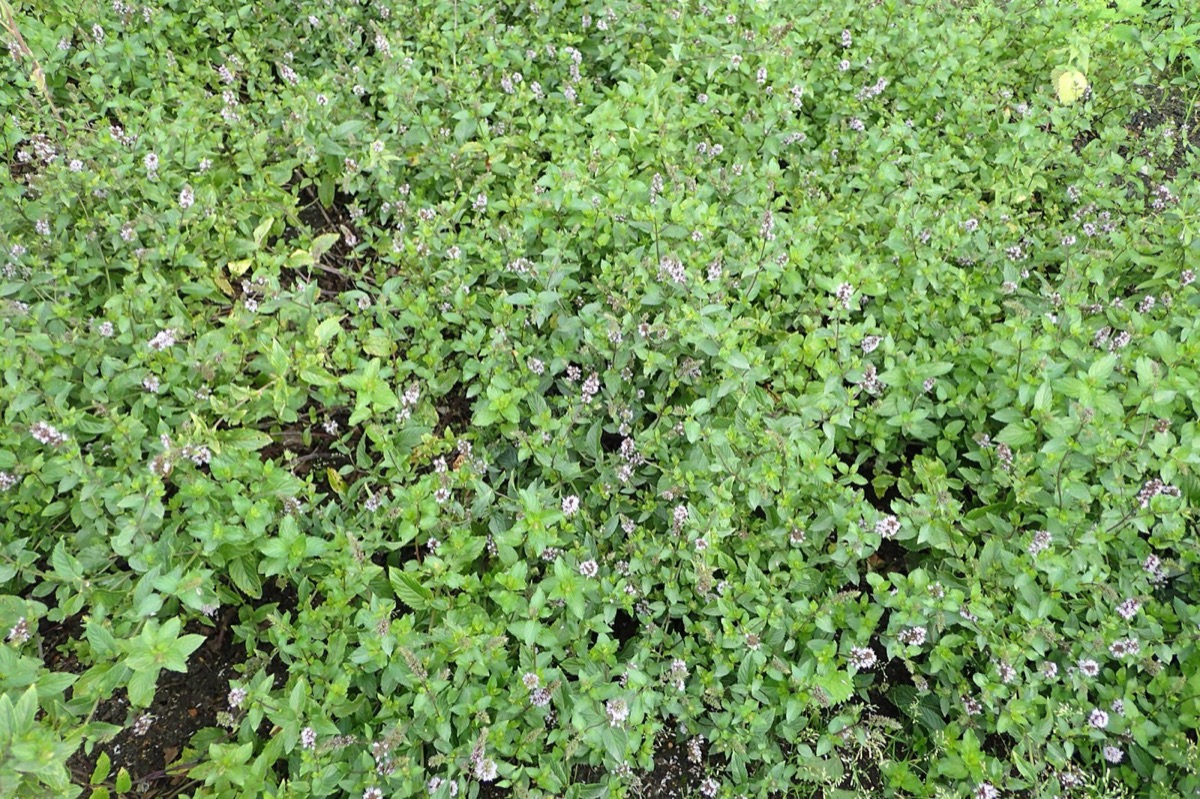
Leaf crops are the most forgiving in containers. Mint, chives, parsley and lemon balm can be cut repeatedly, and the plant regrows from buds near the base. The yield is limited by light and nitrogen, not by a single harvest moment. A 10-litre mint can supply kitchen cuts for a season; it will not supply a market stall.
Flower crops need enough light and enough time to reach flowering. A pot that keeps a plant alive but shaded will produce leaves and few flowers. Root crops are a one-off harvest: the pot volume is effectively the root’s growing medium, and there is no “cut and come again”. Fruit and seed crops need pollination and a longer season; a container can work, but the margin for error is smaller.
This is why “yield per pot” is a misleading single number. Two gardeners with the same pot can get very different harvests because light, water, temperature and time differ. Judge the pot by whether the plant reaches a healthy harvestable size, not by a promised weight.
04Light limits yield before volume does
A plant in a large pot in deep shade will not out-yield a smaller pot in full sun. Light drives photosynthesis, and photosynthesis builds the leaves, roots and flowers you harvest. Most culinary and medicinal herbs want at least six hours of direct sun. If you cannot provide that, choose a shade-tolerant herb or accept a smaller, slower harvest.
Container position also changes temperature. A dark pot against a south-facing wall can bake roots in summer; a light pot in full sun stays cooler. In winter, the same wall may be warmer and more sheltered, which helps some plants and breaks dormancy in others. Move pots rather than assuming one position suits every season.
Reflected light from a pale wall can improve a dim spot, but it does not replace direct sun. Be honest about the site before choosing a large, expensive pot for a sun-loving herb.
05Water and nutrients scale with volume
A small pot dries faster and heats faster than a large one. That means more frequent watering, more fluctuation at the roots and less buffer against a missed day. A large pot is not automatically easier: it holds more water, and in a wet winter it can stay saturated for longer. The right volume is the one that matches the plant’s water use and your ability to manage it.
Feed according to growth, not the calendar. Leafy herbs in a fresh potting mix may need little for the first weeks; repeated cuttings remove nutrients, so a light liquid feed through the growing season helps. Root and fruit crops benefit from a little more potassium later. Stop feeding by late summer so the plant hardens before winter.
Do not fill a pot with garden soil. It compacts, drains poorly and can carry weeds and pathogens. Use a proper potting mix, refresh the top few centimetres each spring, and repot when roots circle the surface or water runs straight through.
06An honest harvest guide
| Crop | Realistic container harvest | Limiting factor |
|---|---|---|
| Mint, chives, parsley | Repeated kitchen cuts through the season | Light, water, frequent harvesting |
| Basil, coriander | A few successions of leaves; short season | Bolting, heat, sowing timing |
| Rosemary, thyme, sage | Sprigs from an established plant; not a hedge | Drainage, winter wet, root volume |
| Ginger, turmeric | A modest rhizome harvest in a long season | Heat, season length, pot volume |
| Astragalus, licorice | One small root harvest after years, if at all | Taproot depth, patience, climate |
These are qualitative expectations, not guarantees. A “modest” ginger harvest might be a few usable rhizomes; a “few successions” of basil might be enough for a household’s summer cooking. The point is to avoid the fantasy that a 10-litre pot can produce a farm’s output if only you add enough fertiliser.
If a plant stalls for a season despite adequate light and water, check the roots. A root-bound plant, a exhausted mix or a pot that stays wet are all more likely than a mysterious nutrient deficiency. Repot, refresh the mix or replace the plant.
07A first container plan
Start with three pots rather than ten: one for repeated leaf harvest, one for a dry-side woody herb, and one for a long-season root or rhizome if you have the heat. That gives you a working comparison without turning the patio into a nursery.
- Choose by root type: match depth and volume to the plant, not the pot’s look.
- Choose by light: put sun lovers where they get six hours; do not gamble on a shady wall.
- Choose by water: group thirsty plants together and dry-side plants separately.
- Record the result: note pot volume, sowing date, harvest and winter survival.
After one season, you will know more about your conditions than any label can tell you. Scale up the pots that worked; give away the ones that did not. A container garden improves by honest observation, not by buying a bigger pot.
Sources & further reading
Horticultural guidance only. This site does not provide medical advice, doses or treatment plans. Written and edited by the Herb Ledger editorial team. Photo: : Krzysztof Ziarnek, Kenraiz · CC BY-SA 4.0 · Wikimedia Commons

Continue