Goji
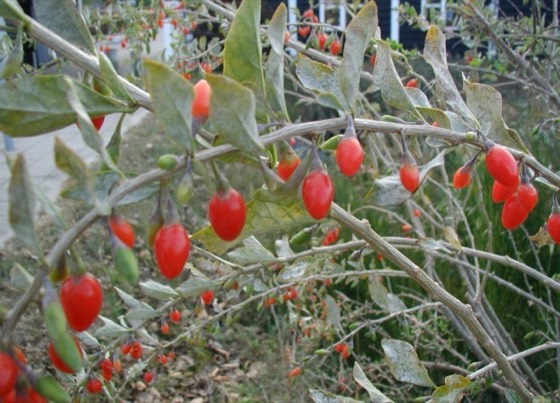
A hedge or large shrub.
- Pick only fully red, slightly soft berries.
- Thorns and suckers are part of the deal.
- Check warfarin and CYP interactions before regular use.
Three woody fruit crops compared by pollination, years to fruit and the space they need.
The table compares the growing decision only. Safety flags are a prompt to read the profile and speak to a clinician, not a ranking.
| Decision | Goji | Schisandra | Jujube |
|---|---|---|---|
| Habit | Arching shrub | Woody vine | Small tree |
| Hardiness | 6–9 | 4–8 | 5–10 |
| Light | Full sun | Sun to part shade | Full sun |
| Water | Low to medium | Medium to high | Low to medium |
| Pollination | Self-fertile | Dioecious: male + female | Self-fertile |
| Years to fruit | 2–3 from cuttings | 3–5 | 3–5 from grafted trees |
| Harvest | Late summer to autumn | Late summer | Autumn |
| Main failure | Birds, thorns, suckers | Sex and pollination | Heat, thorns, suckers |
| Safety flag | Warfarin; CYP interactions | CYP/P-gp; pregnancy data limited | Sugar; diabetes medication |
| Best for | A hedge or large shrub | A shady vine | A hot, sheltered tree |
Years to fruit are garden estimates, not a guarantee. Yield depends on climate, rootstock, pruning and age.
Pollination and patience
Goji and jujube are self-fertile; schisandra is dioecious, so a female needs a male nearby. That is the first plan, before the trellis or the tree guard. The wait also differs: goji from cuttings can fruit in two or three years, while schisandra and grafted jujube usually take longer.
Space is the second cost. Goji suckers and arches; schisandra needs a strong frame; jujube needs heat and room for a small tree. Choose the one that matches the structure you already have, not the fruit you like most.
A hedge or large shrub.
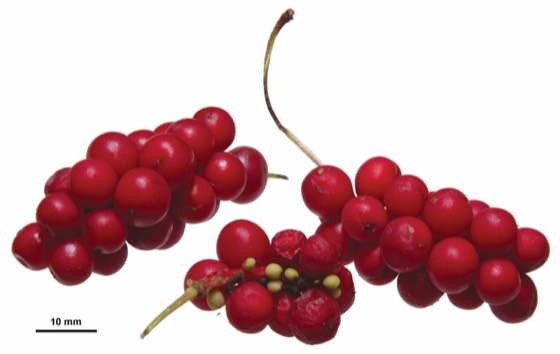
A shady vine.
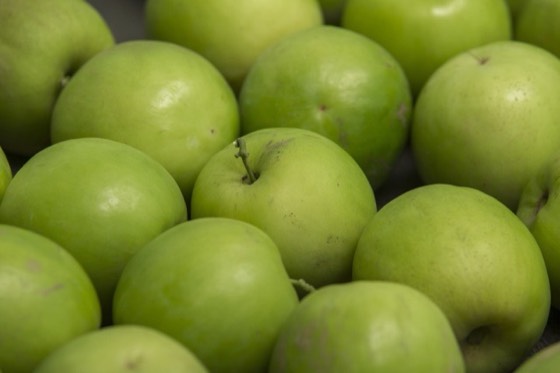
A hot-summer tree.
Accessed for horticultural and safety context. The comparison is an editorial synthesis of these sources, not a controlled trial. Compiled and edited by the Herb Ledger editorial team. See the editorial policy.