Goji
枸杞 Lycium barbarum · Solanaceae
A thorny, arching shrub with a long ripening window: pick only fully coloured fruit, and expect several passes rather than one harvest.
The ripe signal
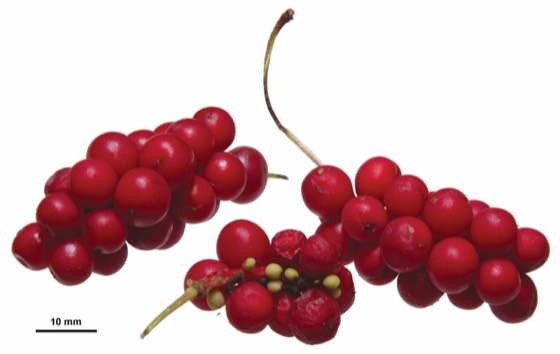
Goji is not a fruit you pick by the calendar. The berries colour unevenly, and the sugar only arrives at the end. A green or orange berry is not ready; a fully red, slightly soft berry is. PFAF notes that the unripe fruit may be suspect while the ripe fruit is wholesome (PFAF).
Expect several passes over several weeks. Birds will find the fruit before you do; netting or a share-and-share arrangement is part of the plan. The shrub is thorny, so pick with gloves and a shallow bowl rather than a deep bucket that crushes the fruit.
| Berry stage | What you see | Action |
|---|---|---|
| Green | Hard, green | Leave it |
| Orange | Colour changing, firm | Wait |
| Fully red | Slightly soft, sweet | Peak harvest |
| Shrivelled on the bush | Wrinkled, still attached | Use or dry promptly |
Growing it
PFAF gives USDA zone 6–9 and describes goji as a deciduous shrub of hedges and waste ground, preferring well-drained soil and tolerating poor ground. Give it full sun and room to arch; a wall, fence or stout stake keeps the plant manageable. Space plants 1.5–2 m apart, and expect suckers.
Water young plants to establish, then sparingly. Prune in late winter, removing weak and crossing stems and cutting back long laterals; the plant flowers on new growth. Wear gloves, because many cultivars are thorny, and remove unwanted suckers promptly.
Harvest and drying
Pick the berries when they are fully coloured and slightly soft, from late summer into autumn. They ripen over several weeks, so harvest every few days. Handle them gently; the skins split easily.
Use the berries fresh, freeze them, or dry them in a dehydrator at low heat until shrivelled but still pliable. Do not eat unripe green berries. Store dried berries in an airtight jar in a cool, dark place.
- Pick only fully red, slightly soft berries.
- Harvest every few days; handle gently.
- Freeze or dry at low heat.
- Store airtight, in the dark.
Identifying it
Goji has alternate, narrow leaves, small purple bell-shaped flowers and oblong red berries. The shrub is thorny and suckers freely. It is a member of the nightshade family, which is a useful reminder that not every attractive berry is edible.
Other Lycium species are grown, and some have different fruit quality. Do not harvest berries from an unidentified shrub, and keep children away from the unripe fruit.
Traditional context
Goji berries have a long culinary and medicinal history in China and are now a common dried fruit in Western shops. They are used in soups, teas and rice dishes, usually in small culinary amounts.
MSK notes case reports of raised INR in people on anticoagulants after consuming Lycium products, and possible effects on CYP3A4, 2C9 and 2C19 substrate drugs. The berry is not a casual supplement for people on medication; this page gives no dose or treatment plan.
Cautions
Safety notes for goji
- May increase INR or bleeding risk in people taking warfarin or other anticoagulants; ask a clinician before regular use (MSK).
- Lycium may affect drugs metabolised by CYP3A4, 2C9 or 2C19; ask a pharmacist before combining (MSK).
- People with lipid transfer protein food allergies may react; stop if you notice swelling, hives or breathing difficulty (MSK).
- Do not eat unripe green berries; PFAF notes that the unripe fruit may be suspect (PFAF).
- Preliminary studies suggest possible blood-sugar effects; monitor if you take diabetes medication and ask a clinician.
- Safety in pregnancy and breastfeeding is not well established beyond food amounts.
- This is horticultural information, not medical advice or a dose recommendation.
A starting point for a conversation with a qualified practitioner or pharmacist — not a diagnosis, dose or treatment plan. See the full safety page.
Questions this plant raises
How long until goji produces fruit?
Cuttings can fruit in the second or third year. Seed-grown plants take longer and may vary in quality.
Why is my goji not fruiting?
Too much shade, too much nitrogen or hard pruning at the wrong time. Prune in late winter and leave the new flowering growth.
Can I grow goji in a pot?
Yes, in a large pot of at least 30 litres with a sturdy support. It will need regular pruning to stay manageable.
Sources & further reading
Accessed for horticultural and safety context. Traditional-use statements are historical and are not evidence of effectiveness. Written and edited by the Herb Ledger editorial team. Read the editorial policy.
More fruits & seeds