Schisandra
五味子 Schisandra chinensis · Schisandraceae
A woody vine with a pollination problem: it is dioecious, so a female plant needs a male nearby before the red berries appear.
The pollination problem
Schisandra is dioecious: individual plants carry either male or female flowers, and PFAF notes that both sexes must be grown for seed or fruit (PFAF). A single vine may grow beautifully and never fruit. This is the first thing to plan, before choosing a trellis.
Buy plants from a supplier that can identify sex, or plant at least two and accept that you may need to wait for flowers to know what you have. Seed-grown plants are a gamble on sex and take longer to fruit. Once a female is established, a male within bee range is enough.
| Situation | What to expect | Plan |
|---|---|---|
| One vine, sex unknown | May be male or female; no reliable fruit | Plant two or buy sexed plants |
| One female + one male | Reliable pollination | Site within bee range |
| Seed-grown seedlings | Sex unknown; slower to fruit | Plant several; keep the best |
| Flowers but no fruit | Likely a male or unpollinated female | Check flowers; add a male |
Growing it
PFAF gives USDA zone 4–8 and describes schisandra in mixed forests and by streams, usually on sandy soils, in semi-shade or light woodland. In a garden, give it a sheltered site with morning sun and afternoon shade, and soil that holds moisture without waterlogging. A north or east wall suits it in hot climates.
Provide a strong trellis, arch or pergola; the vine twines and can reach several metres. Water regularly in dry spells. Mulch to keep the root zone cool, but keep mulch clear of the stems. Prune in late winter to keep the vine within its support.
Harvest and drying
Pick the berry clusters when the fruit is fully red and slightly soft, usually late summer. They ripen unevenly, so harvest in stages. Use scissors to cut the whole cluster rather than pulling individual berries.
Use fresh, freeze, or dry the berries in a dehydrator at low heat. They are juicy, so dry them in a single layer with good airflow. Store dried berries in an airtight jar in a cool, dark place and check for mould in humid weather.
- Pick clusters when fully red and slightly soft.
- Harvest in stages; cut the whole cluster.
- Dry in a single layer with airflow.
- Store airtight; check for mould.
Identifying it
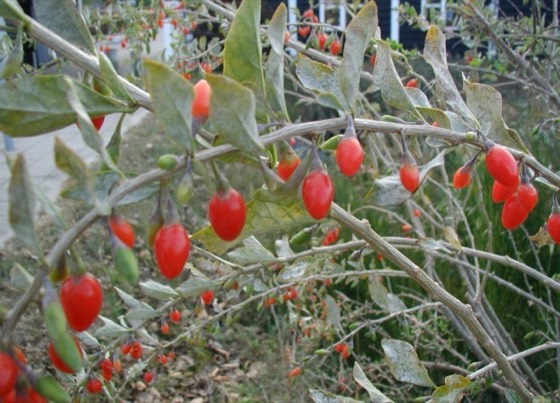
Schisandra has alternate, oval, glossy leaves and small, waxy cream flowers. The fruit is a cluster of round red berries on a central axis, which is the easiest way to tell it apart from other red-berried vines. The stems are woody and twine.
Other Schisandra species and some ornamental vines have red berries. Do not harvest from an unidentified plant. The berries of some unrelated red-fruited vines are toxic.
Traditional context
Schisandra fruit is well known in Chinese medicine, where it is described as having five flavours and is used in multi-herb formulas. It is also used in some Korean and Russian preparations.
MSK notes that schisandra can affect CYP1A2, 3A4 and 3A5 substrate drugs and P-glycoprotein, and can change liver enzyme levels on lab tests. This page covers cultivation and drying, not a dose or treatment plan.
Cautions
Safety notes for schisandra
- Avoid during pregnancy and breastfeeding unless a qualified clinician advises otherwise; safety data are limited.
- May interact with drugs metabolised by CYP1A2, 3A4 or 3A5, and with P-glycoprotein substrates; ask a pharmacist before combining (MSK).
- Schisandra can reduce levels of certain liver enzymes on lab tests; tell your clinician if you use it (MSK).
- May increase stomach acid; caution with reflux or ulcers.
- Do not harvest berries from an unidentified vine.
- This is horticultural information, not medical advice or a dose recommendation.
A starting point for a conversation with a qualified practitioner or pharmacist — not a diagnosis, dose or treatment plan. See the full safety page.
Questions this plant raises
Do I need two schisandra plants?
Yes for reliable fruit. The species is dioecious, so a female needs a male nearby. Buy sexed plants if you can.
How long does schisandra take to fruit?
Seed-grown plants may take four to five years. Cuttings and layered plants usually fruit sooner.
Will it grow in a pot?
It can, but it is a vigorous vine. Use a very large pot with a strong support and keep the roots cool and moist.
Sources & further reading
Accessed for horticultural and safety context. Traditional-use statements are historical and are not evidence of effectiveness. Written and edited by the Herb Ledger editorial team. Read the editorial policy.
More fruits & seeds