Peony
白芍 Paeonia lactiflora · Paeoniaceae
A long-lived perennial where planting depth decides everything: the crown buds must sit just below the surface, or the plant grows leaves and no flowers.
The eyes rule
Peony crowns have buds, often called eyes. Plant them 3–5 cm below the soil surface: deep enough to protect them, shallow enough for cold to reach them. Buried too deep, the plant may grow leaves for years and never flower. This is the single most common peony mistake.
The same rule applies when you divide or move a plant. Replant the divisions at the same depth, water them in, and expect a season or two of reduced flowering. Do not cover the crown with a heavy mulch; keep it clear of the buds.
| Depth | What happens | Action |
|---|---|---|
| 3–5 cm | Buds protected; flowers form | Correct |
| Too deep | Leaves but few or no flowers | Lift and replant shallower |
| Too shallow | Buds exposed to frost | Cover lightly |
| Fresh division | Reduced flowering for a season | Water and leave undisturbed |
Growing it
PFAF gives USDA zone 4–10 and describes peony on dry, open, stony slopes and woodland edges (PFAF). In a garden, give it full sun, rich soil and a cold winter. It dislikes disturbance and competition from tree roots.
Water deeply in the first two summers and mulch with compost, keeping it away from the stems. Do not cut the foliage down until it has yellowed in autumn; the leaves feed the crown for next year. Ants visiting the buds are harmless.
Harvest and drying
Lift roots in autumn of the third to fifth year, after the foliage has died back. Dig widely around the clump and lift it whole, then wash the soil away so you can see the crown buds.
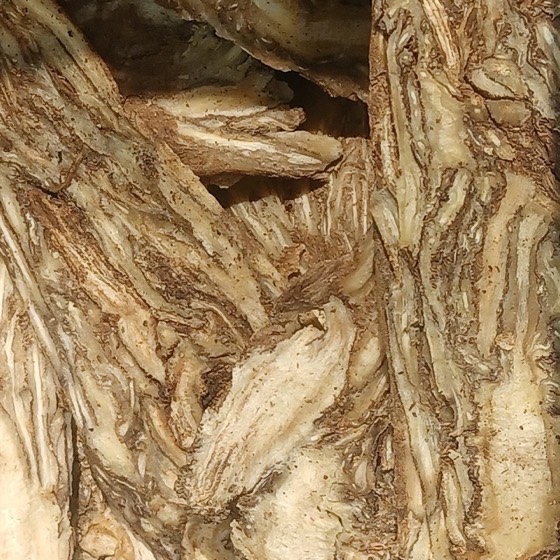
The root is used in slices. Cut the tuberous roots into pieces, remove the small fibrous roots, and slice thickly. Dry at the lowest setting of a dehydrator until hard. Replant the divisions immediately, with three to five eyes each, and water them in.
- Cut back yellowed foliage in autumn.
- Dig wide and lift the whole clump.
- Wash, then divide with a sharp knife.
- Replant divisions with 3–5 eyes, 3–5 cm deep.
Identifying it
Herbaceous peony has deeply divided, glossy green leaves and large, many-petalled flowers in late spring. The root is a cluster of thick, pale tubers with a woody crown. Tree peonies and intersectional hybrids are different plants and are not harvested the same way.
The ornamental value is the main reason to grow it. If you are growing for the root, buy a named Paeonia lactiflora cultivar from a specialist rather than lifting an unknown garden plant.
Traditional context
Peony root has a longstanding place in Chinese medicine, with different preparations described for different plant parts. This site does not evaluate those uses and does not give preparation or dosage instructions.
The horticultural appeal is reason enough: a well-sited peony can live for decades and is one of the most rewarding perennials in a temperate garden.
Cautions
Safety notes for peony
- Limited safety data for medicinal use in pregnancy and breastfeeding; seek professional advice.
- May increase bleeding risk in medicinal doses; caution with anticoagulants and before surgery.
- Do not harvest ornamental peonies from a garden centre and assume the root is suitable for use.
- PFAF lists no known hazards for the plant, but absence of a warning is not proof of safety in every person.
- This is horticultural information, not medical advice or a dose recommendation.
A starting point for a conversation with a qualified practitioner or pharmacist — not a diagnosis, dose or treatment plan. See the full safety page.
Questions this plant raises
Why is my peony not flowering?
The most common cause is planting too deep. The crown buds should sit only 3–5 cm below the soil. Too much shade and overcrowding also reduce flowering.
When is the best time to move a peony?
Early autumn, after the foliage has begun to die back. Spring moving sets the plant back for a season or more.
Do I need to cut the flowers?
Deadhead spent flowers if you want a tidier plant, but leave the foliage until it yellows. Cutting stems too early weakens next year's growth.
Sources & further reading
Accessed for horticultural and safety context. Traditional-use statements are historical and are not evidence of effectiveness. Written and edited by the Herb Ledger editorial team. Read the editorial policy.
More roots & rhizomes