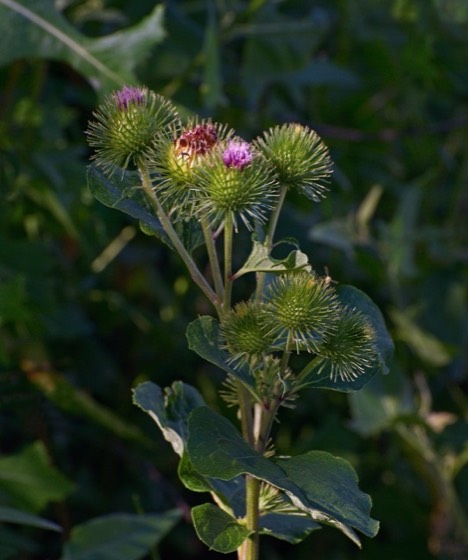
Burdock
A deep taproot.
- The root is the crop; stones make it fork.
- Lift first-year roots in late autumn.
- Cut flower heads before the burrs ripen.
Three Asteraceae plants with very different harvests: a taproot, a big perennial root and a spiny seed head.
The table compares the growing decision only. Safety flags are a prompt to read the profile and speak to a clinician, not a ranking.
| Decision | Burdock | Elecampane | Milk thistle |
|---|---|---|---|
| Habit | Biennial rosette | Perennial clump | Annual or biennial thistle |
| Hardiness | 4–8 | 4–8 | 5–9 |
| Light | Full sun | Full sun | Full sun |
| Water | Medium | Medium | Low |
| Soil | Deep, loose, stone-free | Rich, moist but drained | Lean, well-drained |
| Harvest | Root in year 1 | Root in years 2–3 | Seed heads |
| Main failure | Forked root | Crowded, woody root | Spines and seed shatter |
| Safety flag | Pregnancy; chrysanthemum allergy; atropine contamination | Asteraceae; diabetes/BP; pregnancy | Asteraceae; pregnancy unknown; supplement quality |
| Best for | A deep bed | The back of a border | A seed harvest |
Asteraceae allergy can be severe. This table is a growing comparison, not a recommendation to use any root or seed.
The daisy-family gate
All three are Asteraceae, so the first safety question is shared: do you react to daisies, ragweed or chrysanthemums? Burdock and elecampane are grown for roots; milk thistle is grown for seed. The harvest tools and timing are different, but the allergy caution is not.
The growing decisions are also different. Burdock needs depth and no stones; elecampane needs room for a big clump; milk thistle needs sun, lean soil and gloves. Choosing between them is mostly a choice about which harvest you actually want to clean and dry.
A deep taproot.
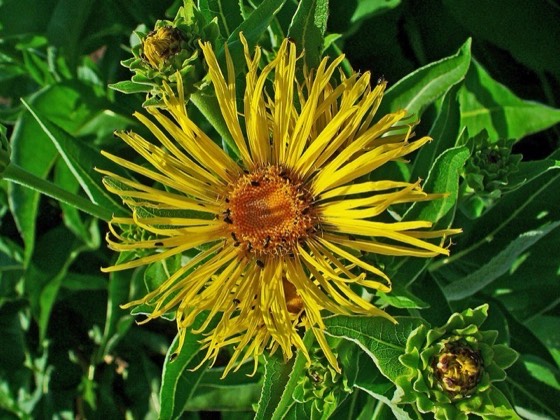
The back of a border.
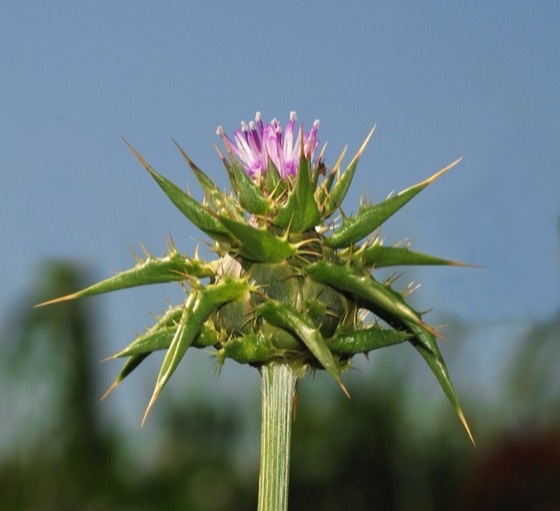
A seed harvest.
Accessed for horticultural and safety context. The comparison is an editorial synthesis of these sources, not a controlled trial. Compiled and edited by the Herb Ledger editorial team. See the editorial policy.