Chrysanthemum
菊花 Chrysanthemum morifolium · Asteraceae
A short-day flower: it buds as the days shorten, so the gardening year is about pinching early and then leaving the plant alone.
The short-day trigger
Chrysanthemums flower in response to shortening days. That is why they arrive at the end of the season, and why a bright streetlight or a warm, artificially lit window can delay or prevent buds. The plant grows through long days and switches to flower initiation when nights lengthen.
The practical consequence is a simple calendar: pinch the growing tips in late spring and early summer to make a bushier plant, then stop pinching and let the short days do the work. Late feeding or hard pruning can push soft growth at the expense of flowers.
| Season | What the plant is doing | Action |
|---|---|---|
| Spring | New shoots | Pinch tips for bushiness |
| Long days | Vegetative growth | Water and support |
| Shortening days | Buds initiate | Stop pinching; leave it alone |
| Autumn | Flowers open | Harvest or deadhead |
Growing it
NC State Extension describes chrysanthemums as full-sun perennials in well-drained soil (NC State Extension). They are heavier feeders than Mediterranean herbs, so add compost in spring and water steadily through summer. Pinch out the growing tips in late spring and early summer for more flower heads.
Tall cultivars need staking; low-growing garden forms usually stand on their own. Divide clumps every two or three years in spring to stop the centre dying out. In colder zones, mulch after the foliage dies back, or lift and overwinter a few stools under cover.
Harvest and drying
Pick the flower heads in dry weather as they open, before they are fully flat. Use scissors and leave a short stem. Harvest in the morning, when the petals are firm and the centre is still tight.
Dry the heads whole in a single layer in a dark, airy room, or use a dehydrator at low heat. Turn them gently once. The flowers are fragile when dry; store them in a rigid container lined with paper rather than a tightly packed jar.
- Pick heads as they open, in dry weather.
- Harvest in the morning.
- Dry in a single layer, in the dark.
- Store in a rigid container, lined with paper.
Identifying it
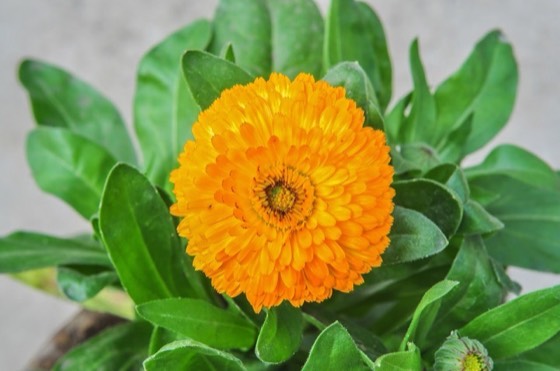
The leaves are deeply lobed, dark green and slightly hairy, and the flowers are composite heads with a ring of ray florets around a central disc. Garden chrysanthemums come in many forms, from single daisies to tight pompoms.
Do not confuse edible chrysanthemum with pyrethrum (Tanacetum cinerariifolium), which is grown for insecticidal compounds and is not a culinary flower. Also check the label: some ornamental chrysanthemums are bred for display, not for use.
Traditional context
Chrysanthemum flowers have a long history in Chinese tea culture and materia medica, and the plant is celebrated in autumn festivals. The flowers are also used in some Korean and Japanese preparations.
MSK notes that chrysanthemum can cause allergic skin reactions and photosensitivity, and that it may affect immunosuppressant and CYP3A4/P-glycoprotein substrate drugs. This page covers growing and drying, not a dose or treatment plan.
Cautions
Safety notes for chrysanthemum
- Asteraceae allergy is common; avoid if you react to daisies, ragweed or chamomile (MSK).
- Can cause skin redness, swelling, itching and increased sun sensitivity (MSK).
- May affect immunosuppressant drugs and CYP3A4 or P-glycoprotein substrate drugs; ask a pharmacist (MSK).
- Avoid medicinal use in pregnancy and breastfeeding without professional advice.
- Do not use pyrethrum or ornamental cultivars as a culinary flower.
- This is horticultural information, not medical advice or a dose recommendation.
A starting point for a conversation with a qualified practitioner or pharmacist — not a diagnosis, dose or treatment plan. See the full safety page.
Questions this plant raises
Why are my chrysanthemums not flowering?
They need short days to initiate buds. Bright artificial light at night, too much shade or too much nitrogen can delay flowering.
Can I grow chrysanthemums in pots?
Yes, in a pot of at least 10 litres. Use a rich compost, water regularly, and repot or divide each spring.
Should I deadhead them?
Yes, unless you want seed. Deadheading keeps the plant tidy and can encourage a few late flowers.
Sources & further reading
- NC State Extension — Chrysanthemum morifoliumNC State Extension
- Memorial Sloan Kettering — ChrysanthemumMSK
Accessed for horticultural and safety context. Traditional-use statements are historical and are not evidence of effectiveness. Written and edited by the Herb Ledger editorial team. Read the editorial policy.
More flowers & flowering tops