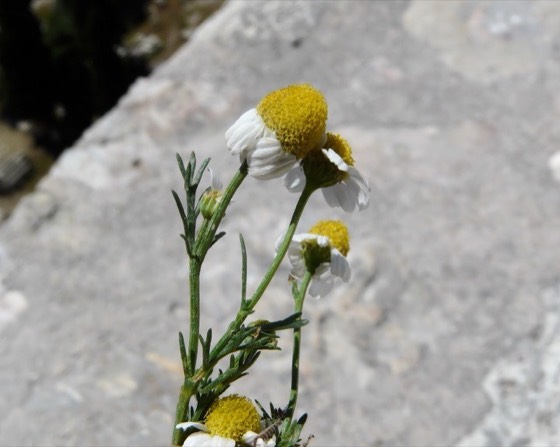
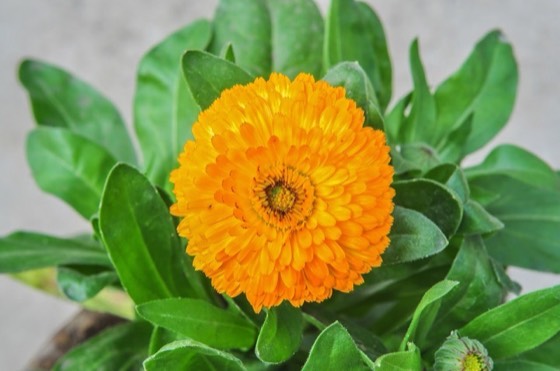
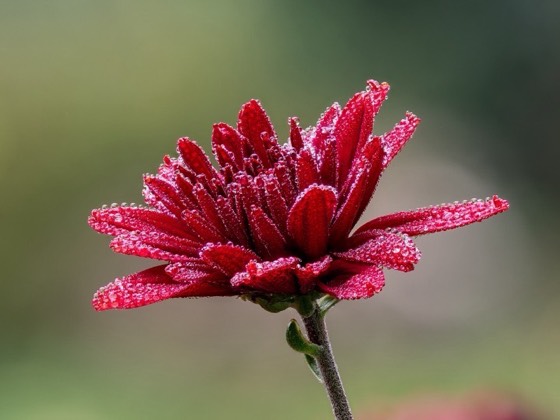
German chamomile
Quick annual tea.
- Sow in spring; it self-sows if you leave a few heads.
- Pick fully open flowers with a firm yellow centre.
- Dry cool and dark to keep the apple scent.
Three daisy-family flowers compared by harvest stage, drying and safety — not by medicinal claims.
The table compares the growing decision only. Safety flags are a prompt to read the profile and speak to a clinician, not a ranking.
| Decision | German chamomile | Calendula | Chrysanthemum |
|---|---|---|---|
| Life cycle | Annual | Annual | Herbaceous perennial |
| Hardiness | 5–9 (annual) | 2–11 (annual) | 5–9 |
| Light | Full sun | Full sun | Full sun |
| Water | Medium | Medium | Medium |
| Pick stage | Fully open, firm centre | Fully open | Heads open in autumn |
| Drying | Cool and dark | Low heat | Low heat |
| Main failure | Rich soil or too much shade | Crowding or dry soil | Night light delays buds |
| Safety flag | Asteraceae; pregnancy unknown; warfarin | Asteraceae; avoid pregnancy and breastfeeding | Asteraceae; immunosuppressants; photosensitivity |
| Best for | A quick annual tea | A long picking season | Autumn flowers and structure |
Hardiness for annuals is a guide to climate, not a promise of winter survival. Safety flags are cautions, not a ranking.
The daisy-family gate
All three flowers are in the daisy family, so the first safety question is shared: do you react to ragweed, chrysanthemums, marigolds or daisies? If you do, treat all three as a handling risk, not just the one you planted.
The differences are in the details. Chamomile has reported interactions with warfarin and some liver-metabolised drugs; calendula is a pregnancy and breastfeeding avoid; chrysanthemum has been linked to immunosuppressant and CYP3A4/P-glycoprotein substrate interactions. Read the profile before you dry a jar.
Quick annual tea.
Cut-and-come-again colour.
Autumn structure.
Accessed for horticultural and safety context. The comparison is an editorial synthesis of these sources, not a controlled trial. Compiled and edited by the Herb Ledger editorial team. See the editorial policy.