Field guide 10
Saving herb seed without a seed library
A home method built on healthy parents, honest isolation, dry seed and good labels — plus the crops that are not worth saving.
01Start with the parent, not the packet
Seed saving begins before the flower opens. Choose healthy, true-to-type plants that have performed well in your conditions: good vigour, the habit you want, no sign of disease, and a harvest you actually liked. Saving from the last survivor of a bad season selects for survival in a bad season, which is not the same as selecting for a good garden plant.
Save from several plants, not one. A single parent narrows the genetic base and can fix weaknesses along with the trait you wanted. For a small garden, six to ten healthy plants of an annual herb is a reasonable minimum; for a biennial, you need enough plants to overwinter and flower together.
Keep the botanical name and your selection notes with the seed. “Basil” is not enough if you are saving a lemon-scented type, and “parsley” is not enough if you want flat-leaf rather than curly. The label is part of the variety.
02Know the pollination system
How a crop is pollinated decides how much isolation it needs. Self-pollinating plants can set seed within a single flower or between flowers on the same plant. Insect-crossed plants exchange pollen with neighbours, so a different variety nearby can change the offspring. Biennials need a second year, and often a cold period, before they flower.
| Group | Examples | What changes for seed saving |
|---|---|---|
| Mostly self-pollinating annuals | Basil, coriander, chervil | Easiest to save; still bag flowers if purity matters |
| Insect-crossed annuals and perennials | Dill, fennel, lavender, sage, rosemary | Need isolation in space or time, or a physical barrier |
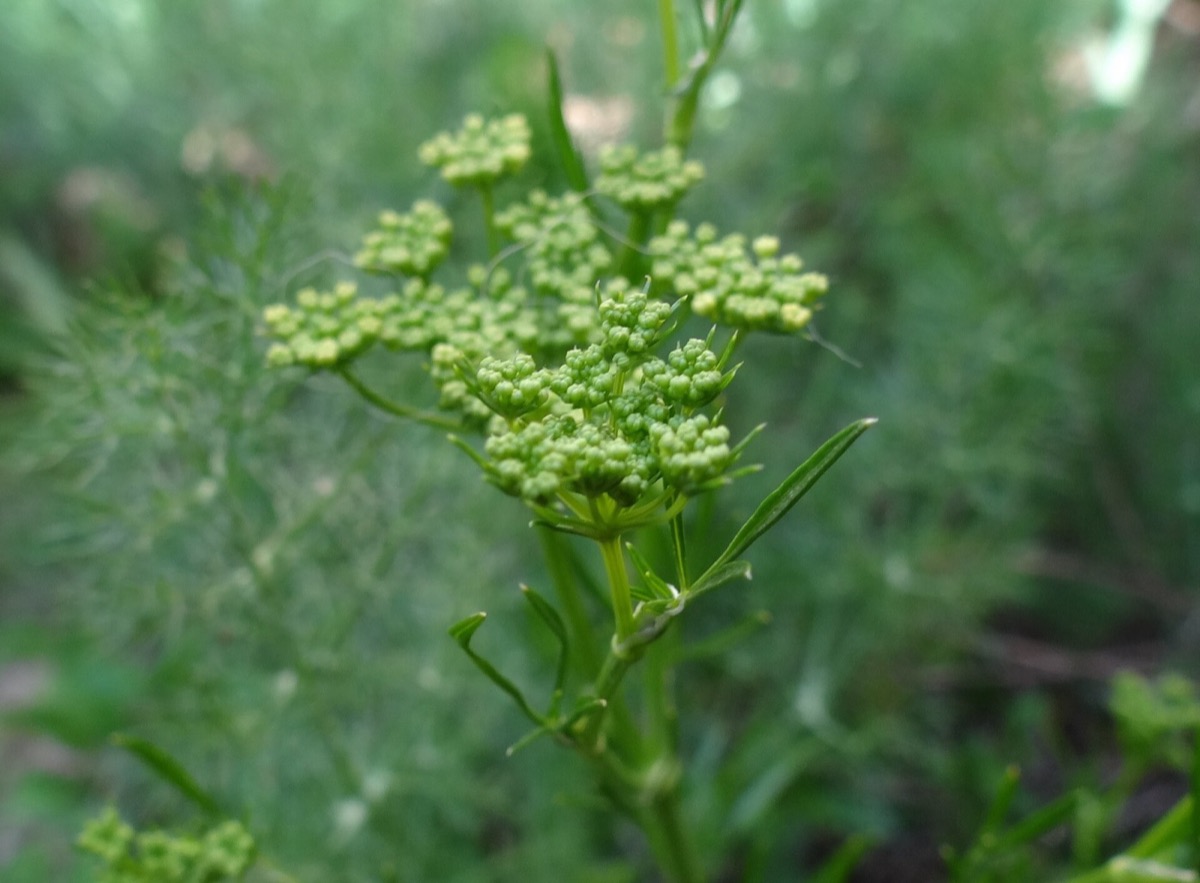
| Biennials | Parsley, caraway, angelica | Overwinter the plant; seed is produced in the second year |
| Perennials with unreliable seed | Mint, some lovage and sorrel types | Divide or take cuttings instead; seed may be sterile or variable |
These are working categories, not fixed rules. Cultivars within a species can differ, and a “self-pollinating” crop may still cross at low rates. If purity matters, treat the crop as if it can cross and use a barrier.
03Isolation in a small garden
Isolation is usually described as a distance, but distance is the least reliable tool in a small garden. Bees forage across fences, and a “safe” gap on paper may be a short flight in practice. Use physical control instead: fine mesh bags over individual flower heads, cages over a whole plant, or hand-pollination followed by bagging.
Time can also separate varieties. Grow one variety to flower early and another late enough that their flowering does not overlap. This works best with short-lived annuals and a clear season. It is unreliable for long-flowering perennials, which may overlap for weeks.
For a home seed saver, the practical question is not “what is the textbook distance?” but “how much contamination can I tolerate?” A few crossed seeds in a batch of 200 may not matter for a kitchen garden. If you are maintaining a named variety, use a barrier and accept that small batches are easier to keep pure than large ones.
04Harvest when the seed is ready
Seed is ready when it is dry, hard and close to being shed. For umbels such as dill and fennel, the seed heads turn brown and the individual seeds darken. For basil, the flowering spikes dry from the bottom upward. For coriander, the round seeds turn from green to pale brown. Do not wait until the whole plant is dead; a windy day can scatter the crop.
Cut the seed head with a length of stem and place it upside down in a paper bag. Label the bag immediately. Paper allows moisture to escape and catches seed as it falls. Keep the bag in a dry, airy place out of direct sun, and check it every few days for mould or insects.
Do not harvest from mouldy, diseased or insect-riddled plants. Seed can carry pathogens and pests into the next season. A clean small batch is worth more than a large doubtful one. If the season is wet, bring plants under cover before the seed heads are fully dry, then finish drying indoors.
05Dry, clean, label, store
Dry the seed until it snaps or crumbles rather than bends. A thin layer on a tray or paper plate, in a warm, ventilated room, is safer than a thick pile. Turn it gently each day. Once dry, rub or thresh the seed free of chaff, then winnow or pick it clean. Small amounts can be cleaned with a sieve or by blowing gently across a shallow dish.
Store seed in a labelled paper envelope or a small airtight jar with a desiccant packet. Keep it cool, dark and dry. A kitchen drawer is usually too warm and humid; a sealed container in a cool cupboard is better. Add the crop, variety, harvest year and any notes about the parent plant.
Before committing the whole batch, test germination. Count 10–20 seeds onto moist paper towel, keep them warm, and record how many sprout. A low result is information, not a failure: sow more thickly, or use the seed for a less demanding purpose. A simple test prevents a disappointing spring.
06What not to save
Do not save seed from F1 hybrids if you expect the same plant. The offspring will segregate, and the result may be anything from excellent to useless. Do not save from plants that bolted early under stress, from weak or diseased specimens, or from a variety you cannot name. Those are not conservation; they are a gamble with a label.
Some herbs are better propagated vegetatively. Mint often sets little viable seed and is easier from runners. French tarragon is prized for a flavour that seed does not reliably reproduce. Rosemary, lavender and sage are straightforward from cuttings, and a cutting preserves the clone exactly. Use seed where it is easy and true; use cuttings where it is not.
Finally, do not save more than you can dry, label and store properly. A jar of unnamed seed is not a seed library; it is a mystery. A small, well-documented batch that germinates is the real achievement.
Sources & further reading
- Michigan State University Extension — Saving seeds from your gardenMSU Extension
- RHS — Propagating herbsRHS
Horticultural guidance only. This site does not provide medical advice, doses or treatment plans. Written and edited by the Herb Ledger editorial team. Photo: : Petruss · CC BY-SA 3.0 · Wikimedia Commons

Continue