Field guide 07
Lookalikes and safe identification
A photograph is not an identification. The families that cause the most garden injuries, and the routine that keeps a harvest from becoming a guess.
01A photograph is not an identification
An app can suggest a name. It cannot tell you whether the plant in front of you is the species you think it is, whether it was grown from the seed you sowed, or whether a toxic relative is growing two metres away. Identification for ingestion needs the whole plant: leaves, stem, flower, root, smell and growth habit.
This is not caution for its own sake. The carrot family includes poison hemlock and water hemlock, both deadly. The daisy family includes plants that cause severe contact dermatitis and some that damage the liver. A confident guess is the most dangerous tool in a herb garden; Poison Control and NCCIH both treat plant ingestion as a medical question, not a gardening one (Poison Control; NCCIH).
02The dangerous families
| Family | Herbs in this index | Why it matters |
|---|---|---|
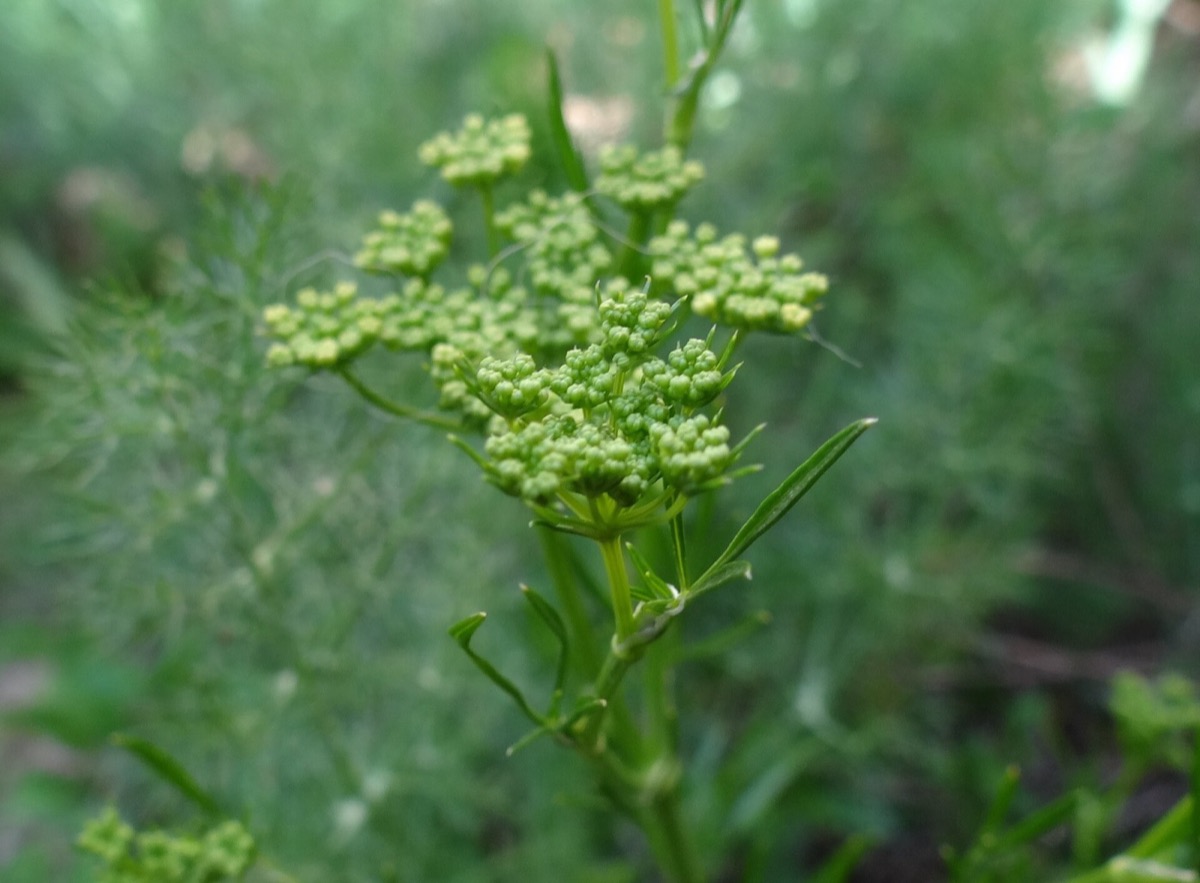
| Apiaceae — carrot family | Dong quai, fennel | Poison hemlock and water hemlock share the lacy leaves and umbel flowers. Roots are especially hard to tell apart. |
| Asteraceae — daisy family | Calendula, chamomile, chrysanthemum, yarrow, elecampane, burdock, milk thistle | Allergy is common. Some family members contain liver-toxic compounds. |
| Solanaceae — nightshade family | Goji | Unripe fruit and many family members are toxic. Eat only fully ripe fruit from a named plant. |
| Ranunculaceae — buttercup family | None in this index | Many are toxic; do not substitute a wild relative for a garden herb. |
Being in a safe family does not make a plant safe: the same family can contain food and poison. The point is to slow down and check the species, not the family.
03A practical identification routine
- Start with the label. Named seed or a named plant from a reputable supplier is the strongest evidence you will have. Photograph the label and keep it with the bed record.
- Check the leaves. Arrangement (opposite, alternate, whorled), shape, margin, venation, hairiness and smell. Crush a leaf and note the scent.
- Check the stem. Square or round? Hollow or solid? Hairy or smooth? Is there sap, and what colour is it?
- Check the flower. Number of petals, symmetry, colour, and how the flowers are arranged. Umbels, spikes and daisies are different structures.
- Check the root or rhizome. Colour, smell, shape and whether it runs. For roots, this is often the decisive feature — and the one most easily missed.
- Compare with two independent descriptions. A field guide and an extension service, not two copies of the same blog post.
- Write it down. Species, cultivar, date, source and bed. If you cannot record it, you cannot verify it later.
04Label the plant, label the jar
Most garden mix-ups happen after harvest. Two bunches of dried leaves look alike in January. Label the plant in the bed, label the drying rack and label the jar with the botanical name and the date. Keep a simple map of the herb beds; it takes ten minutes and prevents years of doubt.
If a label is lost, the plant becomes ornamental until it can be identified again. Do not harvest from an unlabelled bed for ingestion, no matter how familiar it looks.
05Wild collection
Foraging is a separate skill from gardening. This site does not provide a foraging guide, and it discourages wild collection of the plants in this index. Wild populations are under pressure, contamination is hard to assess, and the lookalike risk is highest where plants grow in mixed communities.
If you already forage, treat every umbellifer, every red berry and every daisy as unidentified until proven otherwise. Never eat a plant based on a single feature or a single source.
06When to walk away
Walk away if the identification depends on one feature, if the source is a social media post, if the plant is growing in contaminated ground, if you cannot see the flower or root, or if you feel rushed. The cost of walking away is a missed harvest. The cost of being wrong can be much higher.
A garden reference is a tool for growing and handling known plants. It is not a substitute for expert identification, medical advice or a poison-control assessment.
Sources & further reading
- NCCIH — Herbs at a GlanceNCCIH
- MedlinePlus — Herbal medicineMedlinePlus
- Poison Control — PlantsPoison Control
Horticultural guidance only. This site does not provide medical advice, doses or treatment plans. Written and edited by the Herb Ledger editorial team. Photo: : Petruss · CC BY-SA 3.0 · Wikimedia Commons

Continue