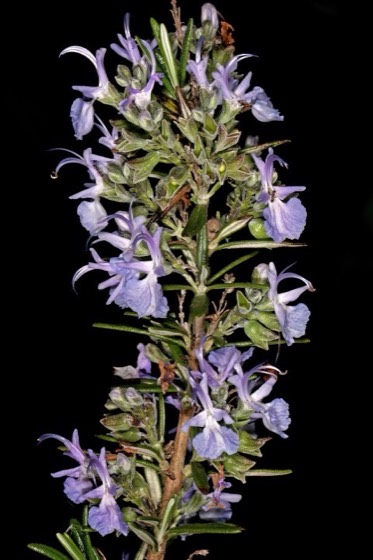
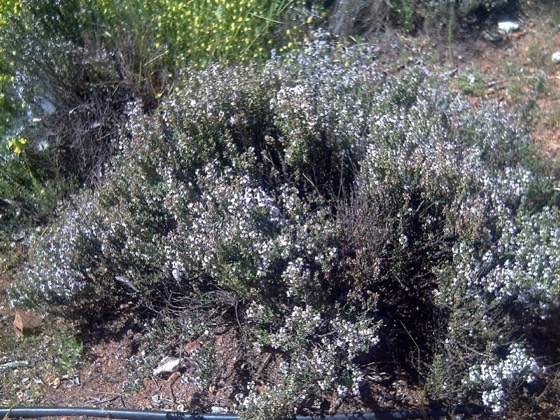
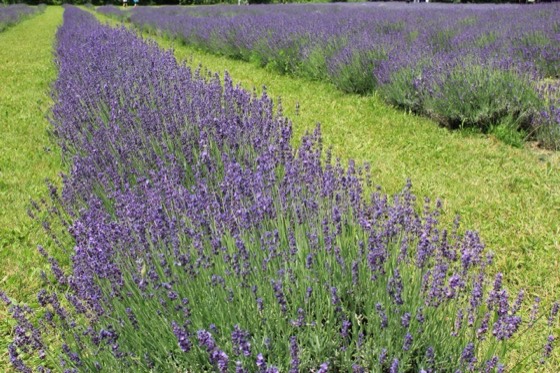
Rosemary
Height and screening.
- A woody shrub for a sunny wall or a large pot.
- Harvest soft growth in spring; avoid hard winter cuts.
- It dies of wet roots more often than cold.
Three Mediterranean plants for a hot, free-draining bed — compared by pruning, harvest and winter risk.
The table compares the growing decision only. Safety flags are a prompt to read the profile and speak to a clinician, not a ranking.
| Decision | Rosemary | Thyme | English lavender |
|---|---|---|---|
| Habit | Evergreen shrub | Low woody perennial | Evergreen subshrub |
| Hardiness | 6–10 (container elsewhere) | 5–9 | 5–8 |
| Light | Full sun | Full sun | Full sun |
| Water | Low | Low | Low |
| Soil | Sharp drainage, sandy or gritty | Sandy, sharply drained | Gritty, alkaline |
| Pruning | After flowering, into green growth | Shear after flowering | After flowering, never old wood |
| Harvest | Year-round; main cut in spring | Spring to early summer | Spikes as buds open |
| Main failure | Wet roots | Woody centre and wet | Wet roots and old wood |
| Safety flag | Oil; pregnancy | Oil; pregnancy; GI inflammation | Oil; sedatives; skin sensitivity |
| Best for | A scented screen | A front edge or pot | Scent and pollinators |
Hardiness ranges vary by cultivar and provenance. The drainage and pruning advice matters more than a one-zone difference.
The drainage and renewal test
All three want sun, lean soil and sharp drainage; the shared limiting factor in a wet climate is the root zone, not the cold. Rosemary and lavender are woody shrubs that need pruning into green growth. Thyme is short-lived and is best replaced from cuttings before the centre opens up.
The practical test is the same for all three: water standing after rain means the site is wrong. The renewal plan is different: rosemary and lavender can be kept for years with light annual pruning; thyme is usually replaced every three or four years.
Height and screening.
Front edge or pot.
Scent and pollinators.
Accessed for horticultural and safety context. The comparison is an editorial synthesis of these sources, not a controlled trial. Compiled and edited by the Herb Ledger editorial team. See the editorial policy.